The agricultural tube cover has become in recent years one of the most effective solutions for protecting young plantations against adverse weather conditions. In a context of increased climate variability, irregular winters, and episodes of early or late frosts, farmers and agronomists are seeking systems that reduce risks without compromising the natural development of the crop.
In this context, the 100% polypropylene non-woven Tube Cover from DNT Agro represents an advanced technical solution specifically designed to enhance plant comfort, protect it from cold, wind, and excessive solar radiation, and promote balanced growth during the most sensitive stages of the crop.
In this context, DNT Agro’s 100% polypropylene non-woven Tube Cover is an advanced technical solution specifically designed to enhance plant comfort, protect against cold, wind, and excessive solar radiation, and support balanced growth during the crop’s most sensitive stages.
The agricultural Tube Cover acts as a protective barrier, creating a more stable microclimate around the plant. Its purpose is not to completely isolate the plant from its environment, but to moderate external conditions by reducing temperature spikes, filtering harmful radiation, and limiting the impact of pests and damage.
In this article, we take an in-depth look at what an agricultural Tube Cover is, how it works from a technical and agronomic perspective, and why it has become a key tool for farming in cold and frost-prone conditions.
¿Qué es una Funda Tubular agrícola?
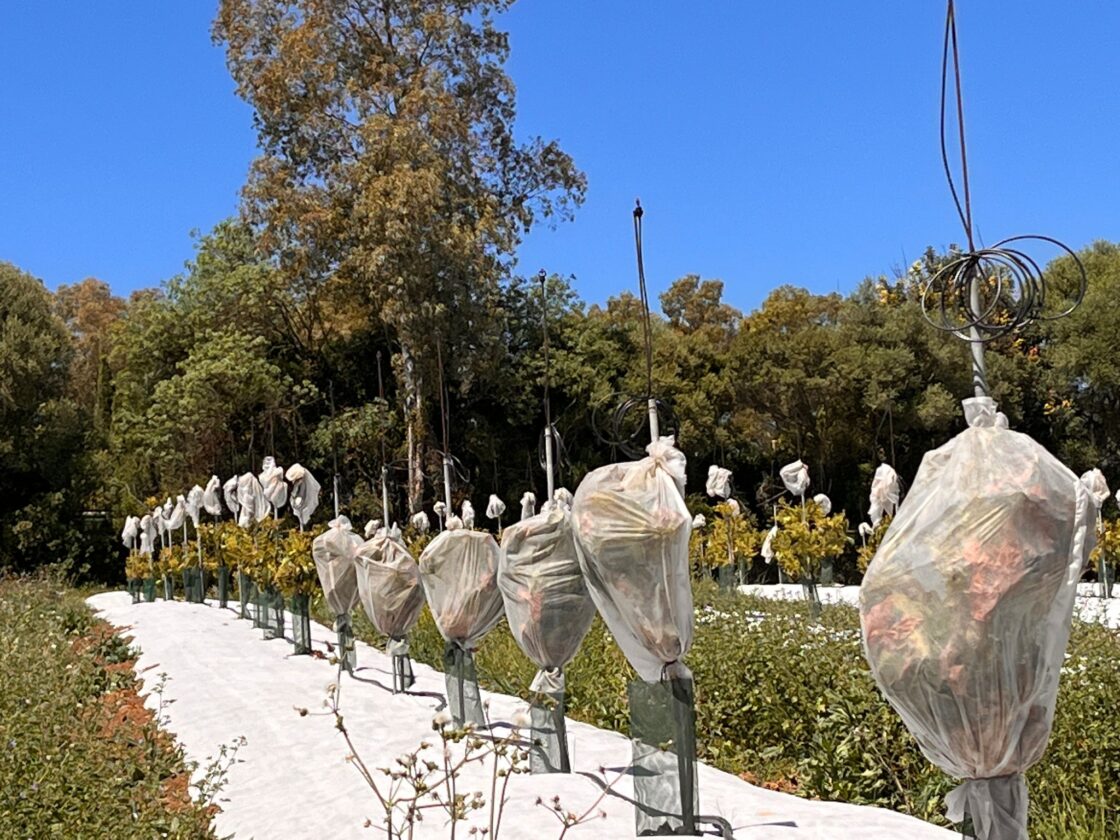
The agricultural Tube Cover is a protective element for plants, designed to be placed around the trunk and above-ground parts of young crops. Unlike other solutions, the Tube Cover provides direct and continuous protection for each plant.
Material and Composition
The DNT Agro Tube Cover is made from 100% polypropylene Spunbond Thermally Bonded non-woven fabric, a material widely used in technical agriculture for its combination of lightness, strength, and breathability.
This non-woven fabric includes UV protection, ensuring a suitable lifespan even in areas with high sunlight exposure, and preventing premature material degradation.
Specific Technical Properties
- Weight: available from 17 g/m², adaptable to different climatic conditions and crop requirements.
- High mechanical and chemical resistance, suitable for demanding agricultural environments.
- Excellent breathability to prevent harmful condensation.
- Customizable dimensions and formats, according to the planting layout and crop type.
- Pre-cut options, which facilitate installation and can reduce labor costs by up to 50%.
- Special treatments and colors, available upon request to meet specific requirements.
How the Agricultural Tube Cover Works
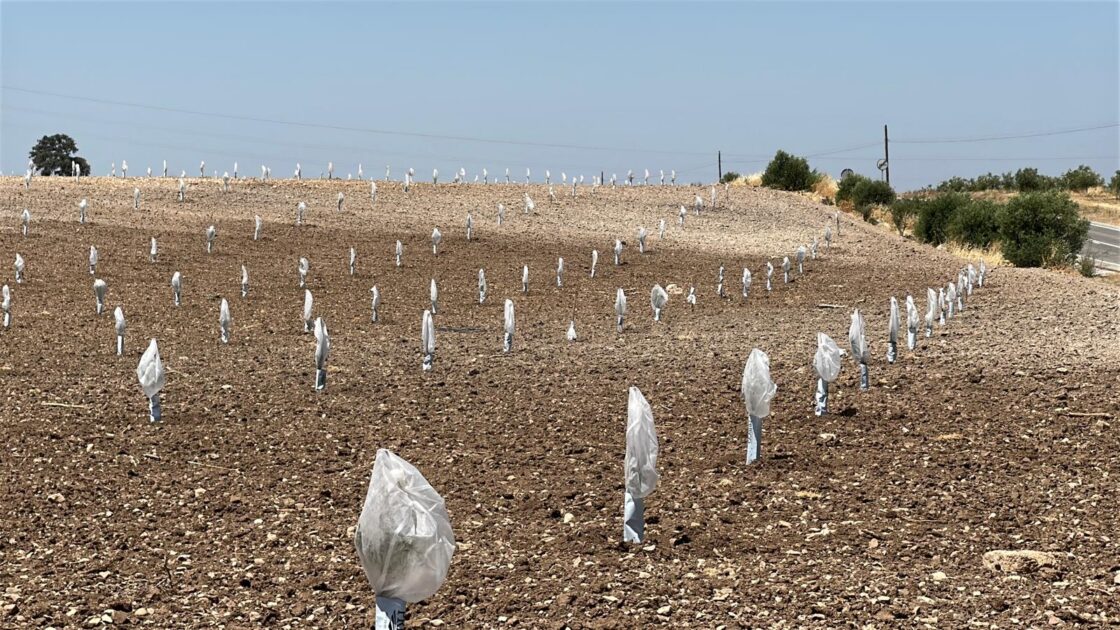
The operation of the agricultural Tube Cover is based on creating a controlled plant microclimate around the young plant. This microclimate does not aim to force growth but to reduce stress caused by external climatic factors.
Reduction of Thermal Stress
During cold nights, especially during frost events, the Tube Cover acts as a passive thermal insulation layer. The non-woven fabric traps part of the heat accumulated during the day and reduces nighttime heat loss, softening sudden temperature drops.
Agronomic studies on non-woven covers indicate that they can raise the average temperature around the plant by 1 to 3 °C, a critical difference for preventing cellular damage in young tissues.
Solar Radiation Filtering
Excessive solar radiation, especially in winter with clear skies after frosts, can cause physiological damage. The Tube Cover filters harmful light radiation while allowing the light needed for photosynthesis to pass through without causing light stress.
Barrier Against Insect Pests
The structure of the non-woven fabric acts as an effective physical barrier against insects such as whiteflies, thrips, or cicadas, reducing pest pressure during the early stages of the crop without the need for intensive chemical treatments.
Crop-Specific Benefits
Avocado
Avocado is one of the subtropical crops most sensitive to cold, especially during the first few years after planting.
- Common problems: frost damage to shoots and leaves, delayed vegetative growth, and mortality in young plants.
- Benefits of the Tube Cover: improved initial vigor, significant reduction of cold damage, and greater uniformity in growth.
Field trials and technical references show mortality reductions of over 30–40% in protected plantations compared to unprotected ones in high-risk areas.
Olive
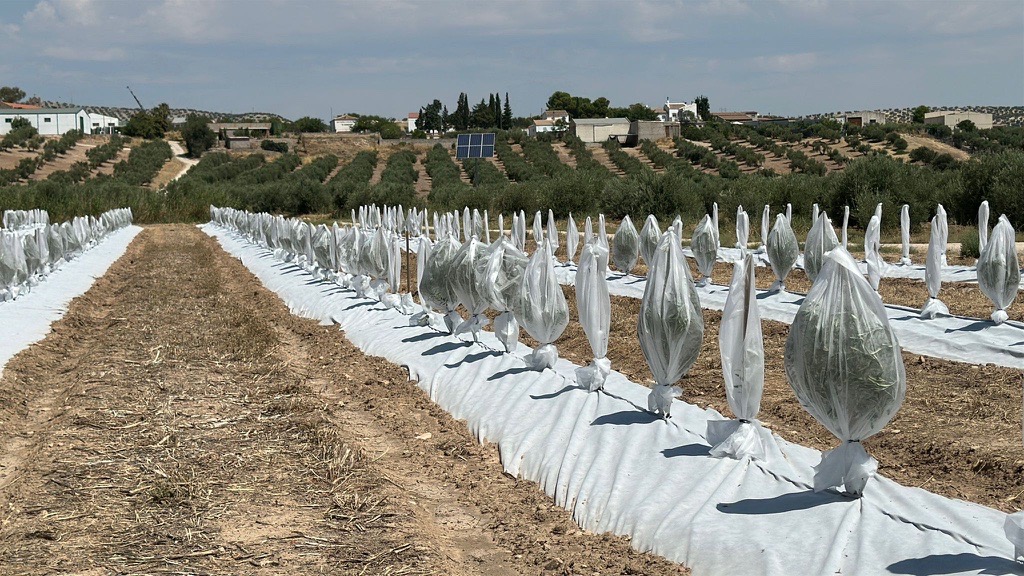
Although the adult olive tree is resilient, young olive plantations are particularly vulnerable to severe frosts and sudden temperature changes.
- Key benefits of the Tube Cover: protection of tender shoots, improved root system establishment, and reduction of mechanical damage from wind.
Citrus
Citrus crops are highly sensitive to sub-zero temperatures during early growth stages.
- Advantages of the Tube Cover: reduced damage to leaves and stems, improved subsequent flowering, and higher fruit retention in following seasons.
What Does the Agricultural Tube Cover Protect Against?
Protection Against Cold and Frost
Reduces the impact of mild to moderate frosts, preventing structural damage to young tissues.
Protection Against Extreme Solar Radiation
Filters harmful UV radiation and reduces sunburn in young plants.
Protection Against Pests
Acts as a barrier against small insects, reducing the need for phytosanitary treatments.
Protection Against Animals
Reduces damage from herbivores and small animals.
Protection Against Mechanical Damage
Reduces the impact of wind, dust, and abrasion in exposed areas.
Installation and Best Practices
Step-by-Step Installation
- Place the cover around the plant after planting.
- Secure the base to the ground without constricting the trunk.
- Ensure the plant has enough space to grow.
- Periodically check the fit.
Practical Tips
- Choose the appropriate weight according to the climate.
- Use pre-cut options to save time.
- Avoid excessive compaction at the base.