
Spring marks one of the most decisive moments in the citrus crop cycle. After the winter period, trees begin to physiologically reactivate and enter a phase of intense vegetative activity: new branches, tender shoots, young leaves, and even the first flowers that will later become the future harvest start to appear.
For farmers, this stage represents a period of high vulnerability for the crop. During these weeks, any external factor — from a late frost to the appearance of pests or diseases — can directly affect shoot development and influence the tree’s performance throughout the rest of the year.
In Mediterranean citrus-growing regions such as Andalusia, Valencia, or Murcia, agricultural technicians agree that spring budbreak is one of the most delicate stages of the crop cycle. At this point, plant tissues are still very tender and highly sensitive to climatic stress, pathogens, and insect attacks.
Understanding what actually happens inside the tree during this stage, as well as the most common problems that may arise, allows farmers to anticipate risks and apply appropriate management strategies to protect their crops.
What Happens in Citrus Trees During Spring Budbreak
After winter dormancy, the gradual increase in temperatures and longer daylight hours trigger the tree’s metabolic reactivation. The reserves accumulated during winter are mobilized, and the tree begins a new phase of growth.
During this stage, different types of shoots appear:
- Vegetative shoots, which will produce new leaves and branches.
- Mixed shoots, combining vegetative and floral growth.
- Floral shoots, which will lead to flowering and eventually fruit formation.
Spring budbreak is usually the most important of the year, as it defines a large part of the vegetative structure that will support future production. In many cases, the vigor and quality of this growth will determine the crop’s productive potential for the season.
However, this phase is also characterized by the presence of very young and sensitive tissues. Newly formed leaves still have poorly developed cuticles, stems are flexible, and cells contain a high percentage of water. This makes the tree particularly vulnerable to environmental stress, which can cause visible damage in a very short time.
In addition, during budbreak the plant produces compounds that are especially attractive to many phytophagous insects, which explains why several pests find this stage ideal for colonizing the crop.
Most Common Problems in Citrus During Budbreak
Spring brings a combination of climatic and biological factors that can seriously affect shoot development. In many citrus farms, growers are very familiar with this period because it is when some of the most recurrent crop problems appear.
Late Frost: A Real Risk Even in Spring
Even though winter has passed, late frost events can still occur during the first months of spring in many citrus-growing areas.
When temperatures fall below certain thresholds, the tree’s young tissues — especially newly formed shoots — can suffer significant damage. Plant cells contain a large amount of water, and when this water freezes it causes ruptures in cell membranes, eventually leading to tissue necrosis.
The most common symptoms after a spring frost include:
- blackening of young shoots
- premature flower drop
- deformities in new leaves
- delayed vegetative growth
In more severe cases, the tree may lose a large part of the shoots it had already produced, forcing it to generate new ones weeks later, which delays its development.
Temperature Fluctuations and Physiological Stress
One of the least visible but most frequent factors during spring is sudden temperature fluctuations between day and night.
It is common during this time of year to have warm days followed by relatively cold nights. These variations can cause physiological stress in the tree, affecting processes such as:
- photosynthesis
- transpiration
- nutrient transport
When the tree experiences this type of stress, symptoms may include:
- irregular shoot growth
- deformed leaves
- slower vegetative development
This phenomenon is especially common during seasonal transitions and can become more severe when combined with other factors such as wind or water deficit.
Pests That Attack Tender Shoots
Spring budbreak is also the moment when many pests find ideal conditions to develop. Sap-sucking insects and leaf miners show a clear preference for young leaves because they contain more nutrients and are easier to penetrate.
Among the most common pests affecting citrus shoots are aphids and the citrus leaf miner.
- Aphids (Aphis spiraecola, Aphis gossypii): feed on sap, deform leaves, and produce honeydew that encourages the development of sooty mold.
- Citrus leaf miner (Phyllocnistis citrella): larvae dig galleries inside young leaves, causing deformities and premature shoot drop.
Diseases Favored by Spring Humidity
Spring also often brings periods of rainfall and high humidity that favor the development of fungal pathogens. Among the most common in mandarin orchards are:
- Alternaria alternata: causes brown spots on leaves and tender shoots.
- Phytophthora spp: affects roots and the base of the trunk in high-moisture conditions.
Attacks during this phase can slow growth and affect future production.
Consequences When Budbreak Is Affected
Problems during spring budbreak can lead to:
- delayed vegetative growth
- weakened trees
- reduced leaf surface
- lower productive capacity
Although the tree can generate new shoots to compensate, this requires additional energy reserves and delays the formation of the tree’s final structure.
Protection Strategies for Citrus Crops
To minimize risks, farmers combine several strategies:
- proper irrigation management
- balanced nutrition
- phytosanitary monitoring
- pruning to improve aeration
In addition, physical protection using protective covers has become a highly effective strategy to ensure the development of the most sensitive shoots.
DNT Agro Tubular Cover: Effective Protection for Citrus
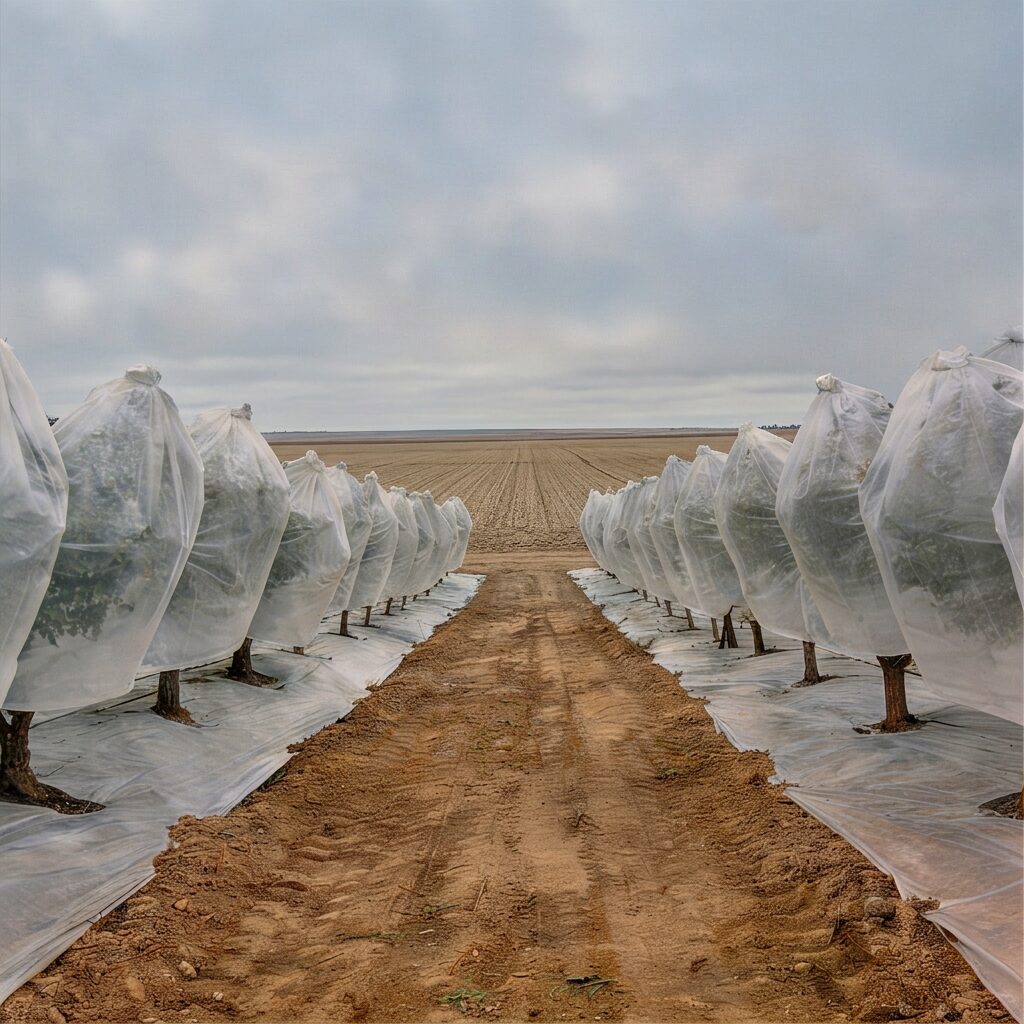
During spring budbreak, young citrus shoots and leaves are particularly sensitive to late frosts, wind, and pests. To protect them, DNT Agro offers tubular cover designed to create a stable microclimate around the tree and support safe shoot development.
These sleeves, made from durable and recyclable materials, allow farmers to:
- reduce the impact of wind on tender shoots
- cushion sudden temperature drops and light frosts
- limit the access of pests such as aphids or leaf miners
- promote vertical and orderly growth of new branches
In this way, DNT Agro tubular cover protect and improve crop health, ensuring that shoots can develop safely during this critical stage of the vegetative cycle.
Conclusion
Spring is a decisive stage in citrus development. During these weeks, the shoots that form will determine the tree’s future structure and productivity. Frost, wind, pests, or diseases can severely affect the crops if protective measures are not taken.
Incorporating strategies such as protection with DNT Agro tubular cover helps reduce risks, encourage more structured growth, and ensure the survival of the most delicate shoots. Anticipating problems during budbreak can make the difference between a difficult season and a crop that develops vigorously from the very start of the growing cycle.