Olive cultivation faces several challenges throughout the year: competition from weeds and suckers, high maintenance costs, water stress during dry periods, and the need to implement sustainable and effective solutions. In this context, DNT Agro’s Anti-Rod for olive trees presents itself as a technical, profitable, and organic-crop-compatible alternative.
What is Double-Layer Anti-Rod?
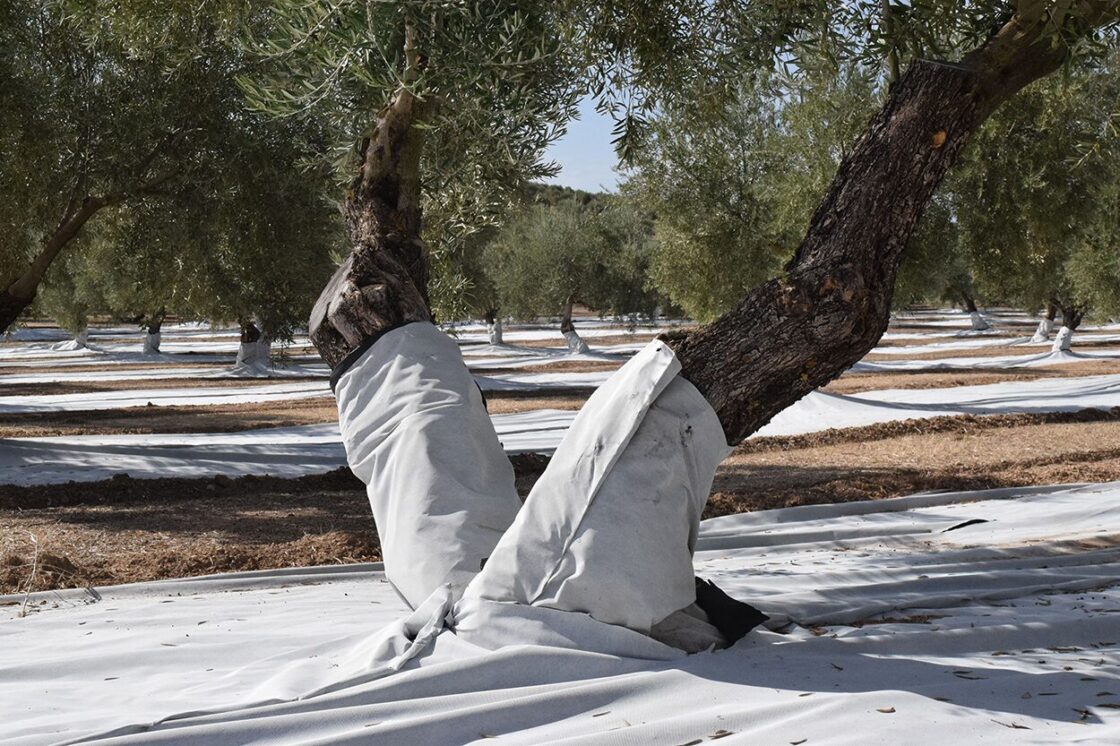
Double-Layer Anti-Rod is a product made from 100% polypropylene Spunbond non-woven fabric with UV protection, designed to prevent the growth of suckers and adventitious buds around the trunk of established trees, such as olive trees.
This material is characterized by mechanical and chemical resistance, breathability, adaptability to different crop needs, and ease of installation. Additionally, it is recyclable and can be integrated into sustainable production systems.
Composition and technical features
The structure of Double-Layer Anti-Rod includes:
- High-strength polypropylene Spunbond non-woven fabric.
- Reinforced UV protection for prolonged sun exposure.
- Customizable options with open or closed sides and dimensions adapted to the crop.
- Compatible with organic cultivation, certified by CAAE.
- Breathable.
Benefits of Double-Layer Anti-Rod for olive trees
- Effective control of suckers and adventitious buds
One of the most common problems in olive groves is the growth of suckers around the trunk, which compete for resources and complicate agricultural tasks. Doble.Layer Anti-Rod acts as a physical barrier, preventing unwanted growth and reducing the need for manual labor to remove it. - Real economic savings
The costs associated with manual sucker removal can reach around 100 €/ha per year. With this product, investment in material and installation can generate significant long-term savings, with an estimated lifespan of up to 10 years in the field. - Protection against wildlife
In addition to sucker control, the non-woven fabric also protects trees from damage caused by rabbits or other wildlife that could harm trunks or lower areas. - Improved olive tree comfort
The breathability of the non-woven fabric allows air and water to circulate properly around the trunk, creating a favorable microclimate and reducing thermal stress.
Agronomic advantages compared to traditional solutions
Unlike conventional herbicides or manual sucker removal (which require time and resources), Double-Layer Anti-Rod offers:
- Passive, continuous control without chemicals.
- Reduced competition for nutrients and water from nearby weeds.
- Compatibility with ecological and sustainable farming practices.
- Reduced water footprint and lower visual impact on the landscape.
Practical guide to installing Double-Layer Anti-Rod
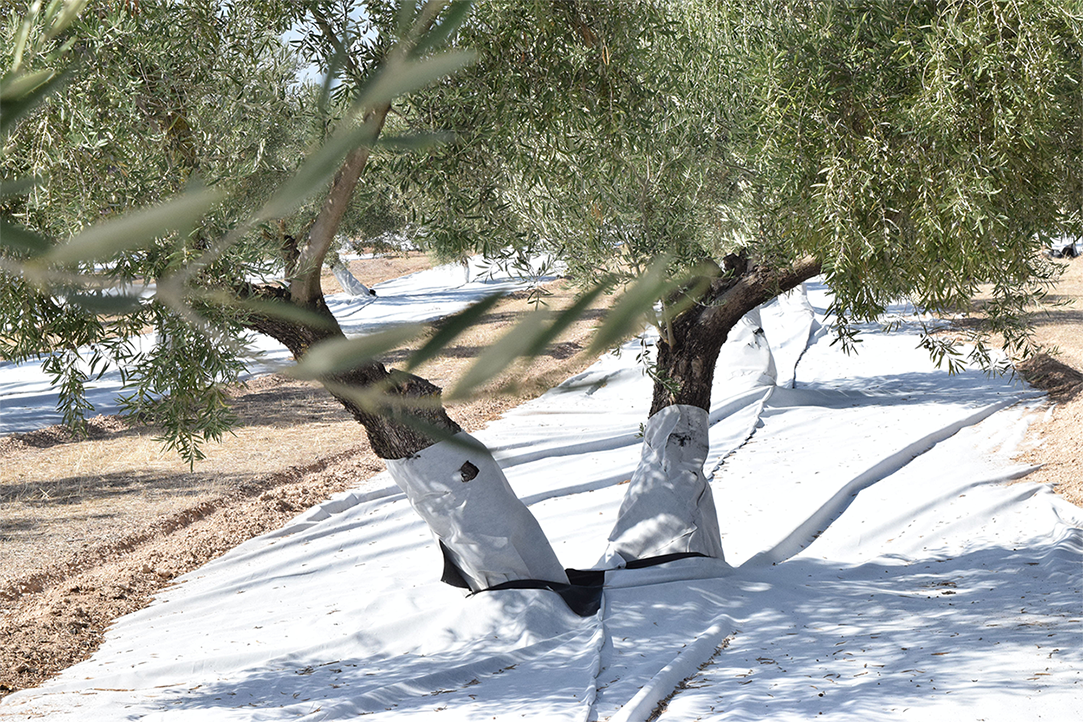
Correct installation maximizes the product’s benefits. Follow these step-by-step instructions:
- Tree and soil preparation
- Clean the base of the plant, removing weeds and stones.
- Ensure the surface is level to facilitate fabric placement.
- Placement of the fabric around the trunk
- Adjust Double-Layer Anti-Rod around the trunk, leaving enough room for plant growth.
- If using the closed-side version, ensure the seam aligns with the trunk.
- Securing to the ground
- Use appropriate anchors or staples to ensure the material stays in contact with the soil without shifting.
- Avoid excessive tension that could deform the fabric.
- Periodic inspection
- Check the fabric regularly, especially after storms or agricultural work, to ensure continued effectiveness.
By following these steps, you will ensure the product functions as an effective barrier against suckers and contributes to the overall well-being of your olive crop.
Investment and return comparison
| Method | Estimated cost (10 years) |
| Manual sucker removal | ~€1,200/ha |
| Double-Layer Anti-Rod investment | €150/ha |
| Total savings over 10 years | ~€1,050/ha |
This comparison demonstrates that investing in Double-Layer Anti-Layer not only reduces labor but also offers a clear and sustainable economic return in olive grove management.