
In recent years, cicadas in olive groves have evolved from being considered a minor issue to becoming a growing concern in many olive-producing regions of southern Europe. While their presence was once regarded as having little economic impact, the expansion of new plantations, the intensification of cultivation systems, and changes in soil management practices have increased the incidence of damage, particularly in young olive trees.
The consequences can be significant. Reduced vegetative growth, branch deformation, delayed tree establishment, and the need for corrective pruning or even plant replacement are becoming increasingly common in affected orchards.
In this article, we explain what the olive cicada is, why its presence is increasing, the damage it can cause, and the most effective preventive measures to protect young olive plantations.
What Is the Olive Cicada?
The species most commonly associated with damage in olive groves is Cicada barbara, an insect belonging to the Hemiptera order and commonly known as the cicada.
Although adults are easily recognized by their characteristic song during the hottest months of summer, most of their life cycle takes place underground. Nymphs spend several years feeding on roots before emerging to complete their development.
Unlike many agricultural pests, the main issue is not caused by adult feeding activity but by the egg-laying process, during which females deposit eggs in young shoots and tender branches.
Why Are Cicada Problems Increasing in Olive Groves?
Agricultural specialists have observed a growing presence of cicadas in several olive-growing areas over recent years. This trend appears to be linked to a combination of factors that favor their development and reproduction.
The main causes include:
- Expansion of intensive and super-intensive olive groves.
- Increased acreage of young plantations susceptible to damage.
- Greater use of permanent cover crops.
- Frequent incorporation of shredded pruning residues into the soil.
- Reduced soil disturbance in certain farming systems.
- Favorable climatic conditions for nymph development.
Together, these factors create ideal environments for cicada populations to thrive.
The Cicada Life Cycle in Olive Groves
Understanding the life cycle of Cicada barbara is essential for implementing effective preventive measures.
Nymph Stage
Nymphs live underground for several years, feeding on the roots of various plants, including olive trees.
During this stage, they remain largely unnoticed, despite representing the longest phase of the insect’s life cycle.
Adult Emergence
With the arrival of summer, typically between June and August, nymphs emerge from the soil and complete their transformation into adults.
Empty exoskeletons, known as exuviae, can often be found attached to trunks, stakes, or surrounding vegetation, serving as a clear indicator of cicada presence.
Reproduction and Egg Laying
After mating, females make small incisions in tender shoots and young branches to deposit their eggs.
This egg-laying activity is responsible for most of the damage observed in young olive trees.
Main Damage Caused by Cicadas in Young Olive Trees
Mature olive trees generally tolerate cicada activity without major consequences. However, young trees, replacements, and recent grafts are far more vulnerable.
The most common symptoms include:
Shoot Dieback
The incisions made during egg laying can partially interrupt sap flow, causing affected shoots to dry out.
Loss of Annual Growth
When the main shoots are damaged, the tree may lose a significant portion of its annual vegetative growth.
Structural Deformation
The loss of shoots can disrupt the desired tree shape and require corrective pruning.
Reduced Vigour
Affected trees often show slower growth and less uniform development compared to healthy plants.
Delayed Entry into Production
Repeated damage can delay proper tree formation and postpone the beginning of commercial production.
Factors That Increase the Risk of Damage
Not all orchards are equally exposed.
Damage is generally more common in plantations with one or more of the following characteristics:
- Clay or heavy soils.
- History of previous cicada infestations.
- Permanent vegetation cover.
- High levels of organic matter.
- Regular incorporation of pruning residues into the soil.
- Excessive vegetative growth.
- Presence of tender shoots during the egg-laying period.
Identifying these factors helps growers adopt targeted preventive strategies.
How to Detect Cicadas Early
Early detection is one of the most effective ways to minimize damage.
Particular attention should be paid to:
- Adult cicadas during summer.
- Presence of exuviae on trunks and stakes.
- Small longitudinal cuts on young branches.
- Sudden drying of tender shoots.
- Unusual reductions in vegetative growth.
Regular inspections between July and September can help identify problems before serious damage occurs.
Strategies to Prevent Cicada Damage in Olive Groves
Prevention remains the most effective approach to reducing the impact of cicadas.
1. Continuous Monitoring
Regular field inspections make it possible to detect population increases and anticipate potential problems.
2. Balanced Cover Crop Management
Cover crops provide many agronomic benefits but should be managed carefully to avoid creating favorable conditions for pest development.
3. Temporary Retention of Certain Shoots
In areas with high cicada pressure, some specialists recommend delaying specific training operations to reduce damage to primary shoots.
4. Physical Protection of Young Trees
For young olive groves, physical protection has become one of the most effective and sustainable preventive measures available.
Why Is Physical Protection the Most Effective Solution?
The main advantage of physical barriers is that they provide continuous protection throughout the entire risk period.
Key benefits include:
- Prevent access to vulnerable shoots.
- Significantly reduce egg-laying activity.
- Protect annual vegetative growth.
- Do not create resistance issues.
- Do not affect beneficial insects or pollinators.
- Suitable for conventional, integrated, and organic farming systems.
- Effective regardless of weather conditions.
For these reasons, physical protection is increasingly used in newly established olive plantations.
Advantages of the DNT Agro Tree Shelter for Young Olive Trees
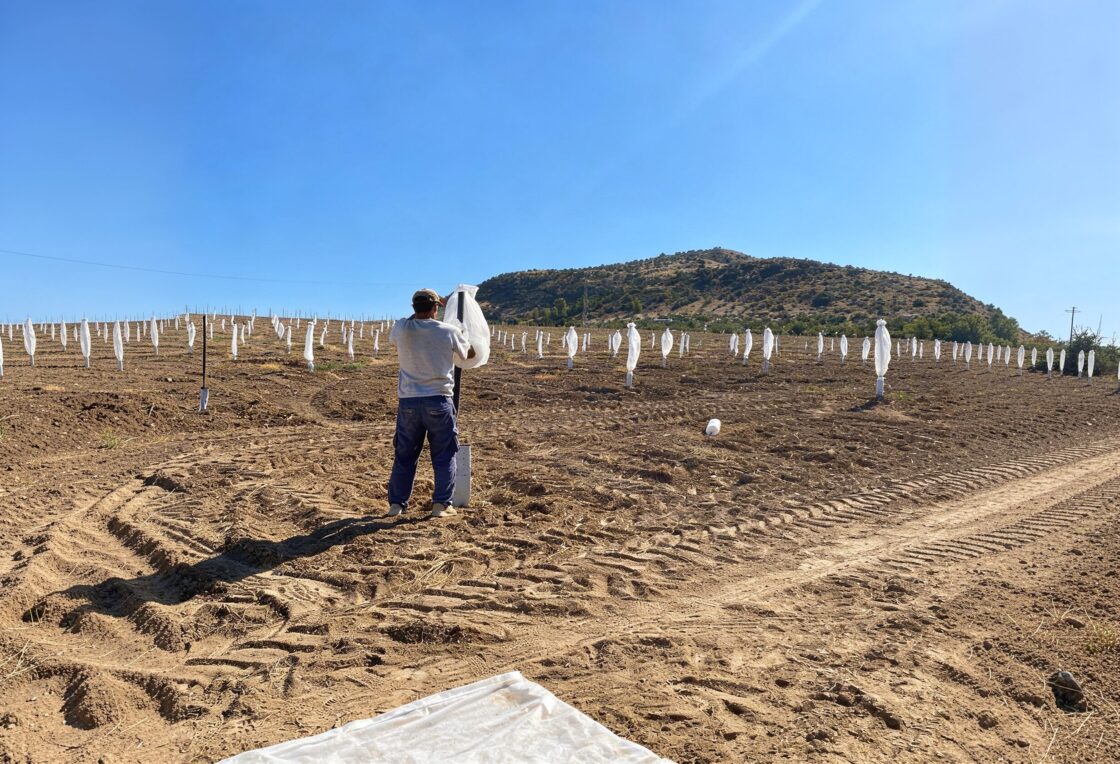
The DNT Agro Tubular Cover has been specifically designed to protect young trees during their most vulnerable stages of development.
Against cicada damage, it acts as a physical barrier that helps prevent egg laying on tender shoots and stems, significantly reducing the risk of injury.
In addition, it offers several valuable benefits:
- Protection against rabbits and rodents.
- Reduced risk of herbicide damage.
- Lower wind stress.
- Improved microclimate around the tree.
- Straighter and more uniform growth.
- Higher establishment success rates.
These combined advantages make the tree shelter a comprehensive solution for protecting young olive trees during the critical early years of growth.
Best Installation Practices
To maximize effectiveness:
- Install the shelter at planting time.
- Regularly inspect its condition.
- Ensure proper attachment to the stake.
- Adjust height according to tree growth.
- Remove or replace it once the tree has passed the vulnerable stage.
Correct installation is essential for achieving optimal protection.
Frequently Asked Questions About Cicadas in Olive Groves
Can cicadas kill an olive tree?
In mature trees, severe damage is uncommon. However, in young olive trees they can seriously affect growth and development.
When is the highest-risk period?
Generally between July and September, coinciding with adult emergence and egg laying.
Are insecticides effective?
Their effectiveness is often limited because the primary damage results from egg laying rather than feeding activity.
Are tree shelters compatible with organic farming?
Yes. Since they function as a physical barrier without chemical action, they are fully compatible with organic production systems.
Should several preventive measures be combined?
Yes. The most effective strategy typically integrates monitoring, proper agronomic management, and physical protection of young trees.
Conclusion
The increasing presence of cicadas in olive groves represents a growing challenge for many growers, especially in young plantations undergoing establishment and training. Although the damage may initially seem minor, its impact on tree growth, structure, and future productivity can be considerable.
The best approach is to act proactively by understanding risk factors and protecting young trees during their most vulnerable years. In this context, tree shelters have proven to be one of the most effective, sustainable, and cost-efficient solutions for reducing cicada damage and ensuring successful plantation establishment.
Investing in prevention today means securing a healthier, more productive, and more profitable olive grove in the future.