Spring is the most decisive season in cherry cultivation. It is the time when trees bloom, fruits begin to set, and any unexpected weather event can make the difference between a profitable harvest and significant losses. Heavy rain, hail, or sudden temperature changes not only threaten fruit quality but can compromise the entire season in just a few days.
In this article, we analyze how spring storms affect cherry trees, their consequences on production, and, most importantly, how to protect crops using effective solutions such as the DNT Agro Tubular Cover.
Why Spring Is a Critical Stage for Cherry Trees
During spring, key physiological stages for cherry production take place:
- Flowering and pollination: Fertilization depends on active pollinators and the absence of persistent rainfall.
- Fruit set: After fertilization, fruits begin to develop and are highly sensitive to water and climate stress.
- Development and ripening: The cherry skin becomes tighter, increasing vulnerability to cracking.
Therefore, every day of adverse weather in spring has a direct impact on the quantity and quality of the harvest.
How Spring Storms Affect Cherry Trees
Spring storms combine several factors that can damage cherry crops:
Heavy rainfall
Excess water, absorbed both by the roots and directly through the fruit’s skin, causes an increase in internal pressure within the fruit and promotes cracking. Persistent humidity can also increase the incidence of fungal diseases.
Hail
Hail causes direct mechanical damage such as blows to the fruit, wounds to young branches or partial defoliation, affecting the quality and yield of the harvest.
Wind
Wind, especially when accompanied by rain, can cause chafing, fruit drop, and dehydration, affecting both young and adult plantations.
Sudden temperature changes
Temperature drops associated with storms cause physiological stress in the fruit, increase vulnerability to cracking, and can delay ripening.
The problem of cracking: What is it and what does it consist of?
Cracking is one of the main causes of fruit loss in cherry orchards. It occurs when the fruit’s skin cannot withstand the internal pressure caused by water absorption, leading to rupture and exposing the pulp. There are different types of cracking: peduncular, apical, or lateral.
Factors that increase cracking:
- Sensitive varieties
- High humidity
- Rain close to harvest
- Advanced fruit development stages
Real Consequences on the Harvest
- Direct losses: up to 100% of production affected by cracking or fruit drop.
- Indirect losses: higher harvesting costs, smaller fruit size, and price penalties.
- Impact on the season: reduced supply and income, affecting the farmer’s economic stability.
Traditional Protection Methods
There are several strategies that help reduce damage, each with its own advantages and limitations:
- Tights: They protect against hail and reduce direct exposure to rain, helping to maintain the quality and size of the fruit.
- Plastic covers: They limit direct contact of the fruit with rain during critical phases, always managing ventilation to prevent moisture accumulation.
- Foliar treatments: Some products strengthen the fruit’s skin and increase its resistance to cracking, but their effectiveness depends on the time of application and the variety cultivated.
While all these methods help, for comprehensive protection against spring storms, it is advisable to combine physical strategies with solutions that reduce risk from the beginning of the production cycle.
How to Protect Cherry Trees: An Effective Solution
The DNT Agro Tubular Cover represents a practical and technical solution to protect cherry trees from rain, wind and temperature changes.
What It Is and How It Works
It is a breathable cover that envelops the plant, creating a microclimate around the fruit and young shoots. This protection does not block the natural environment, but rather buffers adverse factors that can cause significant losses.
Main Benefits
- Reduced rain damage: minimizes cracking and fruit drop.
- Wind protection: prevents chafing and premature fruit drop.
- Temperature buffering: reduces physiological stress on the plant.
- Balanced fruit development: promotes a more uniform and higher-quality harvest.
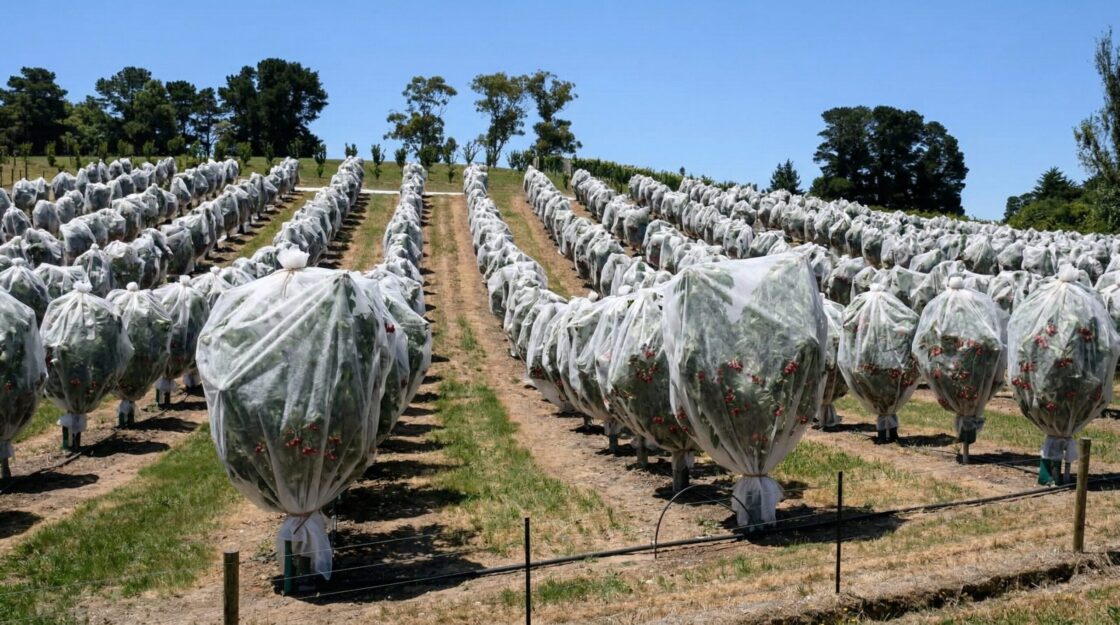
Its installation is simple, it adapts to young plantations and allows effective protection without compromising ventilation or the natural growth of the tree.
Specific Benefits in Cherry Cultivation
La aplicación de la Funda Tubular de DNT Agro en el campo ofrece resultados tangibles:
- Reduced losses: Protects fruit during the most critical stages.
- Improved fruit quality: Larger size, lower rejection rate, and more uniform fruit.
- Greater production stability: Helps ensure consistent and profitable harvests, even in the face of adverse weather events.
Conclusion
Las tormentas primaverales son una amenaza real para cualquier cultivo de cerezo. La combinación de lluvia, viento y cambios bruscos de temperatura puede arruinar una campaña completa en horas.
La clave está en anticiparse y proteger el cultivo desde el inicio del ciclo productivo. Herramientas como la Funda Tubular de DNT Agro permiten crear un microclima favorable, reduciendo riesgos y asegurando cosechas de calidad, más uniformes y con mayor rentabilidad.
Proteger tus cerezos no es solo una cuestión de cuidar la fruta, sino de asegurar la viabilidad económica de tu explotación y aprovechar al máximo cada temporada.